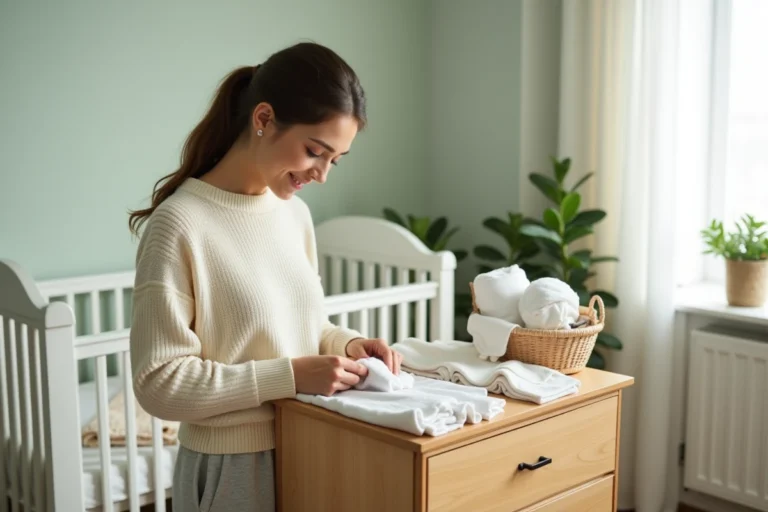
Parenting generates a mental load that many mothers carry in silence. Between questions about the infant’s sleep, doubts about feeding, and accumulated fatigue, finding a suitable support space for moms can sometimes feel like an obstacle course. Yet, resources exist, from local support groups to online forums, but their visibility remains uneven and their quality varies.
Maternal mental load and parenting: what public resources change
Since 2023-2024, several local authorities in France have been experimenting with parenting support programs focused on the maternal mental load. These initiatives are part of the “1,000 first days” framework and the Parent Listening, Support, and Assistance Networks (REAAP).
In practice, this takes the form of free workshops, perinatal psychology consultations, or discussion groups led by professionals. Access often goes through PMI and CAF, which serves as a safety net for mothers who have neither the time nor the budget to seek private support.
These public programs fill a gap. Informal groups on social media offer solidarity but rarely provide a structured framework. Specialized associations, such as Maman Blues for maternal difficulties, do recognized work; however, their scope remains focused on specific issues. The arrival of a broader institutional network allows mothers to find an initial listening space without having to name a diagnosis.
On the Maman Anonyme website for moms, this logic of a non-judgmental supportive space is found in a digital format accessible at any time, complementing physical resources.

Online mom community: between free support and paid offers
The digital landscape of parental support has evolved in recent years. On one hand, free Facebook groups and forums continue to gather thousands of mothers around everyday topics. On the other hand, a movement of “premiumization” is emerging: platforms are offering paid access to communities led by parenting coaches or mental health professionals.
This model raises questions. Should support between moms remain free to be accessible? Paid offers argue for a better-moderated framework, verified content, and personalized support. Free spaces, on the other hand, rely on the volume and diversity of shared experiences.
Feedback from the field varies on this point. Some mothers report finding decisive support in a paid private group, with calmer exchanges and fewer contradictory pieces of advice. Others believe that free access guarantees a form of universality, where the solo mom and the partnered mother have access to the same speaking space.
What distinguishes a supportive space from a simple forum
Displayed kindness is not enough. Several concrete criteria separate a reliable support space from a group where judgments circulate under the guise of advice:
- An explicit moderation charter, regularly reminded, with rules on respecting parental choices (breastfeeding, diversification, childcare)
- The occasional or regular presence of a professional (midwife, psychologist, parenting coach) capable of correcting erroneous medical information
- An accessible and promptly addressed reporting system, to prevent vulnerable testimonies from being commented on in a hurtful manner
- Guaranteed anonymity or pseudonymity, allowing moms to ask questions without fear of being identified in their daily lives
A good parental support space protects both the speech and those who carry it.
Mothers’ mental health: the limits of peer support
Community support provides real relief, especially in the first months after childbirth. Reading the testimony of another mom going through the same sleepless nights or food anxiety reduces the feeling of isolation.
This dynamic has its limits. A support group does not replace perinatal mental health follow-up. Postpartum depression, parental burnout, or anxiety disorders require a diagnosis and medical support. However, in some online spaces, distressed mothers receive the only response of “courage, it will pass,” which can delay appropriate care.

Associations like Maman Blues or Les BURN’ettes play a relay role by directing individuals to professionals. Their existence proves that the boundary between community support and care remains blurred for many families. The available data does not allow for measuring how many mothers transition from a support group to a consultation, but field actors report a frequent gap between the moment when suffering is expressed online and when an appointment is made.
Solo parents and daily life: a specific need for support
Single mothers accumulate logistical constraints and mental load without support at home. For them, a space for exchange among moms does not serve the same function as for a partnered mother. It sometimes replaces the only adult social connection of the day.
Dedicated groups for solo parents exist, some co-facilitated by activists and health professionals trained in intersectional issues. These spaces intersect parenting, precariousness, and social isolation, three dimensions rarely addressed together in generalist communities.
Gentle parenting advice: spotting reliable information
The proliferation of sources of advice on family life creates a constant noise. Between Instagram posts, threads on forums, and influencer recommendations, a mom seeking guidance can feel overwhelmed by contradictory information.
Some reflexes can help sort through:
- Check if the advice is based on an official recommendation (HAS, competent health authorities) or on an individual experience presented as universal
- Beware of guilt-inducing formulations like “a good mother always does X”
- Prefer spaces where professionals intervene to provide nuance, without monopolizing the conversation
Gentle parenting is not just an educational method. It starts with how mothers talk to each other in these spaces where they dare to say that not everything is rosy without fearing a harsh comment. A functioning support space is one where doubt has its place, where each mom’s experience counts as much as another’s, and where asking for help is never seen as a sign of weakness.