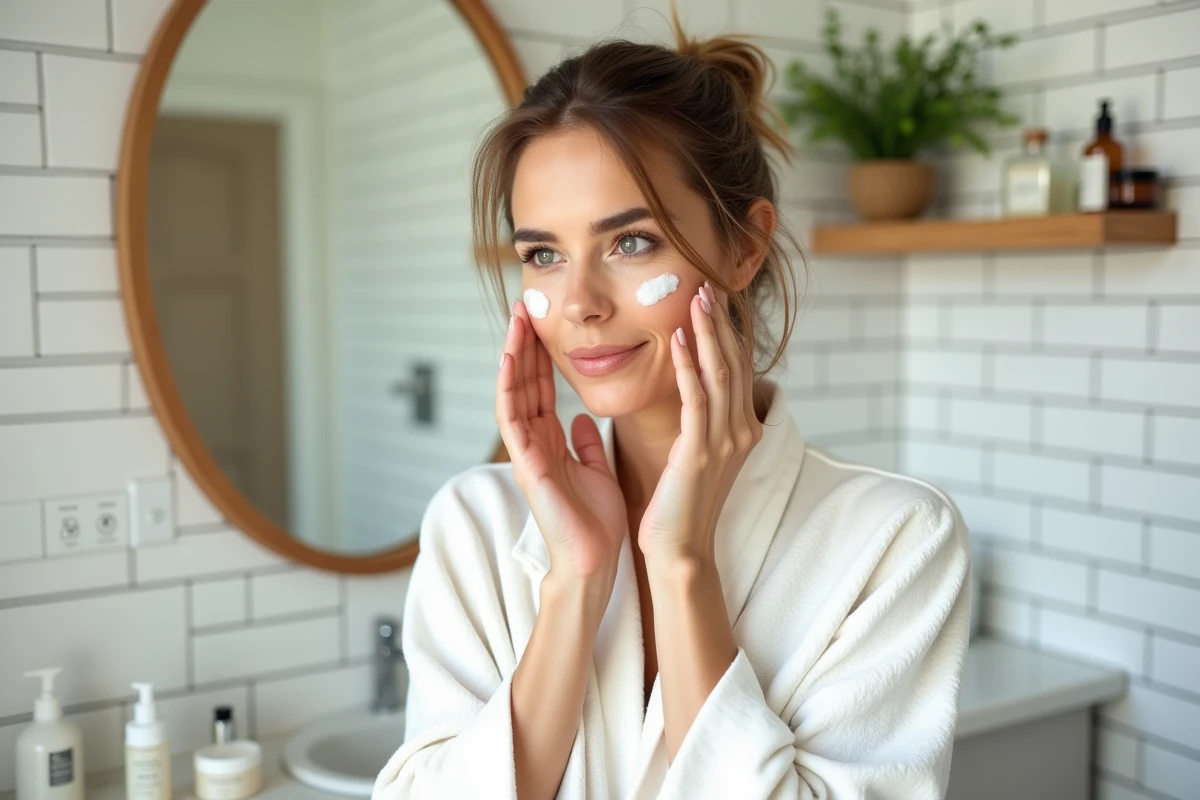
Reducing the number of products applied to the face each morning often yields better results than piling on skincare. In recent years, short beauty routines have gained ground over lengthy protocols, and available data shows that the skin responds better to a targeted approach. This article compares the actions that truly impact the radiance of the face, hair, and body on a daily basis, based on recent trends in cosmetics.
Minimalist beauty routine vs. multi-step routine: what the data shows
Market studies published by Mintel and Kantar indicate a rise of skinimalism in cosmetic purchases since 2023. Eight or ten-step routines are declining in favor of protocols limited to two, three, or four products.
This trend is not just a passing fad. Several dermatologists point to a direct link between the layering of skincare products and irritation of the skin barrier, especially on sensitive or reactive skin.
| Criterion | Short routine (2-4 products) | Long routine (8-10 products) |
|---|---|---|
| Risk of skin irritation | Low | Higher, especially for sensitive skin |
| Morning and evening time | Few minutes | Up to twenty minutes |
| Environmental impact (packaging, water) | Reduced | Significantly higher |
| Compatibility with skin microbiome | Better preservation | More frequent disruption |
| Average monthly budget | Moderate | Significantly higher |
The table summarizes the gap between the two approaches. In practice, a moisturizer suited to your skin type, a gentle cleanser, and sun protection cover the majority of facial needs. Those who wish to deepen their knowledge of skincare and makeup will find additional resources on the babioles beauté website, which gathers practical sheets by skin type.
Microbiome-friendly skincare: a selection criterion for the face
The skin microbiome, a collection of microorganisms that protect the epidermis, has become a central focus in cosmetics since 2022. Brands like Gallinée, La Roche-Posay, or Typology offer formulations enriched with prebiotics and postbiotics, tested to avoid disrupting this ecosystem.
Clinical trials published by these laboratories show a objective reduction in redness and sensitivity after a few weeks of use. This type of care is particularly aimed at reactive skin, but also at anyone who layers products and experiences tightness or persistent imperfections.
Identifying a microbiome-friendly product
- The label “microbiome-friendly” on the packaging, along with a specific clinical test proving the absence of disruption to the skin microbiome
- A formulation free from harsh surfactants (sulfates), which preserves the skin’s natural hydrolipidic film
- The presence of prebiotic or postbiotic active ingredients in the INCI list, often in combination with a moisturizing agent
A microbiome-friendly cleanser, used morning and evening, is a better alternative to double cleansing that strips the skin flora. Fewer products, better chosen, better protect the skin barrier.
Sleep and beauty: the underestimated parameter in the daily routine
Some cosmetic brands and wellness apps now integrate objective sleep tracking as a key parameter in their personalized beauty programs. Through smartwatches or dedicated apps, they combine facial routine recommendations with sleep hygiene.
This coupling is based on a shared observation by dermatologists: cellular regeneration of the epidermis occurs during deep sleep phases. Regular sleep deficits result in a dull complexion, pronounced dark circles, and slower healing skin.
Adapting the evening beauty routine to sleep patterns
Applying a rich night cream just before sleeping is not enough if sleep quality is poor. The most effective evening care remains a regular bedtime. Limiting screens an hour before bed, maintaining a cool temperature in the bedroom, and avoiding heavy meals promote quick falling asleep.
On the other hand, applying a hydrating serum or a postbiotic-based treatment thirty minutes before bed allows the actives to penetrate the epidermis before the nighttime regeneration phase. This application window changes the perceived effectiveness of the product.
AI visual diagnosis: personalizing care without multiplying purchases
Since 2023, several major players in cosmetics have offered visual diagnostic tools powered by artificial intelligence. These tools analyze a photo of the face to assess hydration, imperfections, wrinkles, and pigmentation, then recommend an adapted routine.
The goal is not to add products, but to target the right ones. A reliable diagnosis helps avoid buying an anti-wrinkle cream when the main issue is a lack of hydration, or investing in a radiance serum when the skin primarily needs a gentler cleanser.
- The diagnostics offered by brands like Sephora or Nivea cross-reference several visual parameters in a matter of seconds
- The recommendations take into account skin type, age, and local climatic conditions
- These tools reduce unnecessary purchases and guide toward short routines, consistent with the skinimalist trend
This type of diagnosis does not replace a dermatological opinion in case of skin pathology. It serves as a useful filter for daily life, especially when hesitating between several products in the beauty aisle.
Recent data converge on the same conclusion: enhancing daily beauty comes from the precision of actions, not their accumulation. Choosing two or three suitable products, respecting the skin microbiome, caring for sleep, and utilizing available diagnostic tools yields more visible results than a long and costly routine. The skin, hair, and facial radiance respond better to consistency than to quantity.