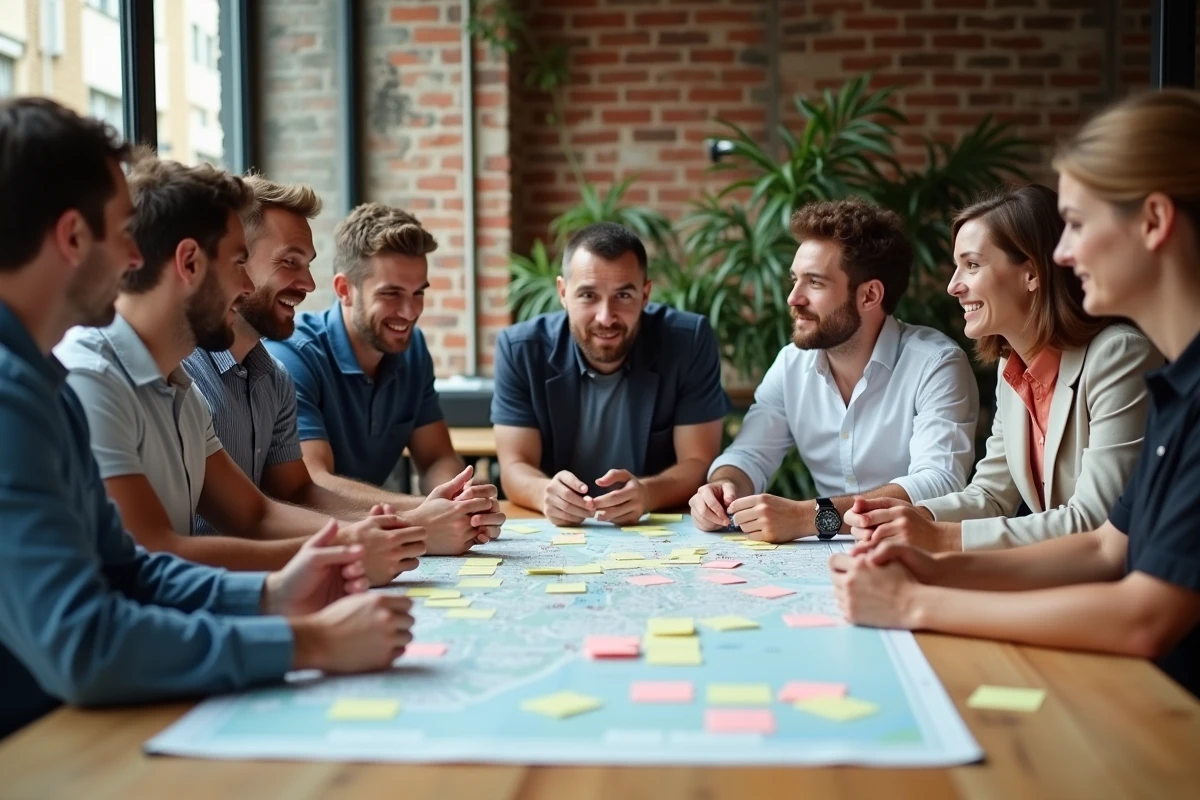
Team building refers to a set of collective activities organized outside the usual work environment, aimed at improving communication, cooperation, and trust among colleagues. In Rennes, the variety of available formats (cooperative games, urban surveys, creative workshops, hybrid activities) allows each event to be tailored to specific team cohesion objectives.
Hybrid team building in Rennes: including remote employees
Since 2023, several companies in the Rennes digital ecosystem, particularly those affiliated with French Tech Rennes Saint-Malo, have adopted hybrid activity formats during their seminars. The principle: combine an on-site physical activity with collaborative online challenges in real-time.
Specifically, participants on-site engage in a challenge (urban rally, collective construction, escape game) while remote colleagues receive a kit at home and contribute via a synchronous platform. The playtime is shared, and scores are aggregated.
This format addresses a real operational constraint. When a team has members working fully remote across multiple cities, organizing a team building activity in Rennes that excludes half the group produces the opposite effect of what is intended. The hybrid activity avoids this trap by synchronizing both groups around a common goal.
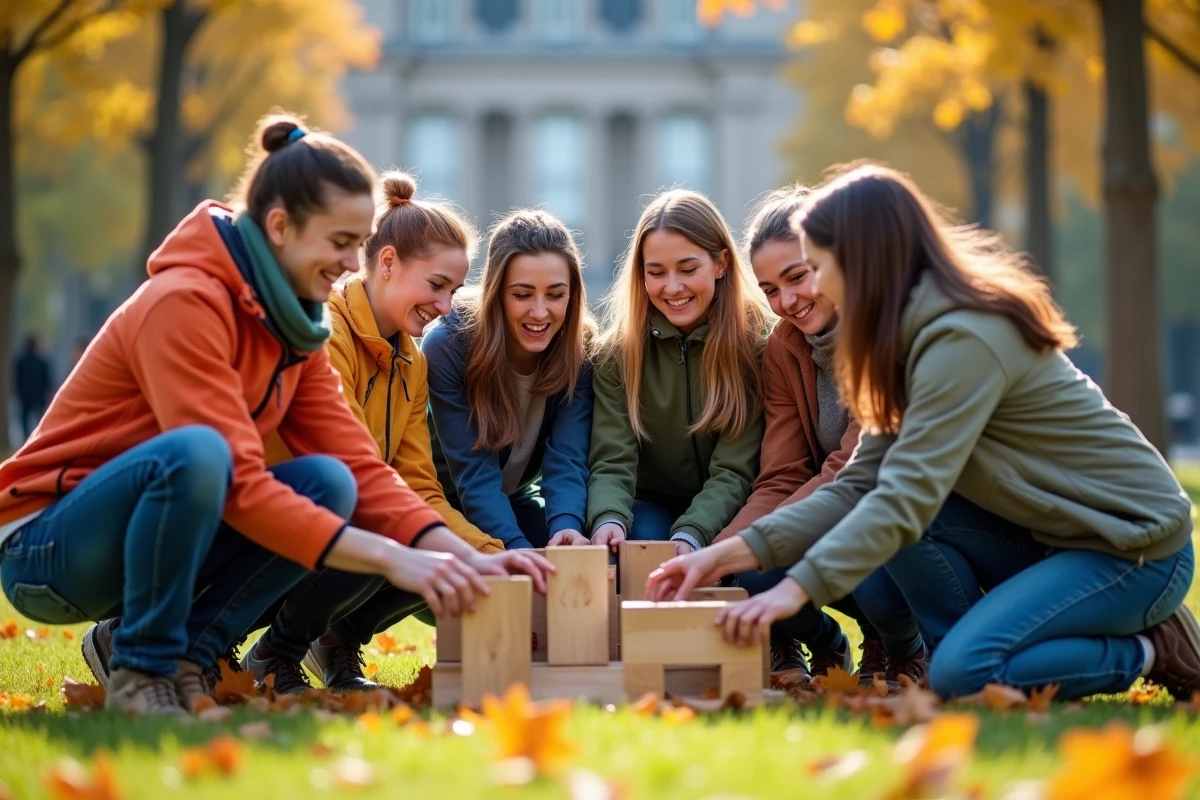
The technical difficulty lies in calibrating the pace. An on-site physical challenge naturally lasts longer than an online quiz. Providers who master this format plan alternating phases: field action time, collective reflection time via video, followed by cross debriefing. Without this alternation, the remote group disengages after twenty minutes.
Team cohesion and prevention of psychosocial risks: the concrete link
The most structuring trend in Rennes in recent years does not concern the choice of activity, but its HR purpose. Several human resources departments in the banking, insurance, and digital services sectors have begun to include team building in their psychosocial risk prevention plans (RPS).
This repositioning is based on the updated recommendations from INRS and ANACT between 2023 and 2024. Team building now appears in some QVCT (quality of life and working conditions) agreements as a tool for workplace health, rather than just a moment of conviviality.
In practice, this changes the way the event is organized. The fun activity is linked with regulation, listening, or structured feedback workshops. A cooperative game in the morning can be followed by a debriefing session led by a facilitator trained in group dynamics.
Linking team building and RPS prevention requires prior framing with HR, not just with the communications department or office manager. The choice of activity then stems from a diagnosis: identified tensions within the team, communication deficits between departments, integration of new employees after a reorganization.
Criteria for selecting a team building activity suitable for your team
The catalog of providers in Rennes is extensive. To avoid choosing an activity solely based on its apparent originality, three technical criteria should be evaluated before any booking.
- The number of participants and the modularity of sub-groups. An activity designed for twelve people does not work for forty. Check if the provider offers team breakdowns with rotation, which maintains engagement over time.
- The alignment between the format and the intended cohesion objective. A mobile escape game develops problem-solving in small groups. An urban rally in downtown Rennes encourages mutual discovery in a newly formed group. A creative workshop (collective mural, construction) is better suited for teams that need to slow down and exchange without time pressure.
- The provider’s ability to integrate a structured debriefing. An activity without collective feedback remains entertainment. The debriefing transforms the experience into learning that can be transferred to daily professional life.
Outdoor or indoor activities in Rennes: what it changes
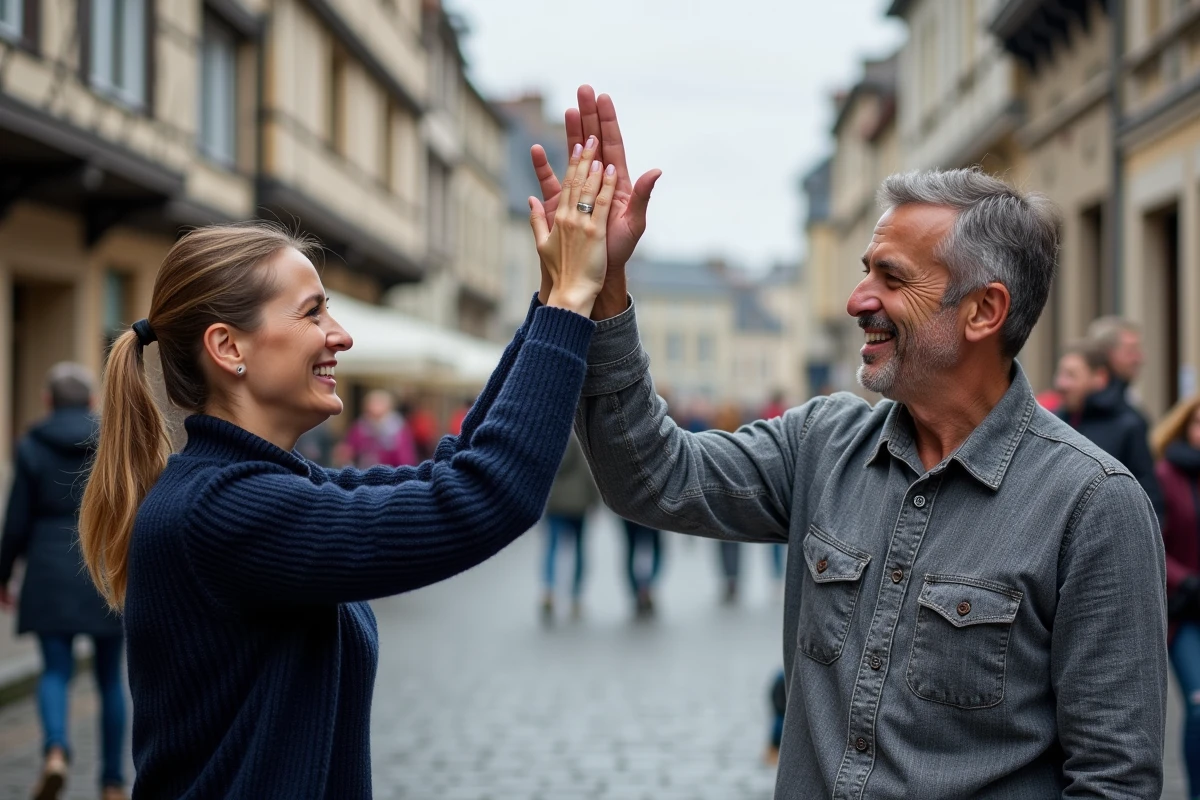
The choice of setting is not just a matter of Breton weather. An outdoor activity in the city (scavenger hunt, photo survey, rally) exposes the group to the unexpected and stimulates adaptability. It suits teams that already work well together and seek a playful challenge.
An indoor activity (in your premises or a privatized venue) offers a controlled environment, more conducive to calm exchanges and workshops requiring concentration. For a team in a rebuilding phase after a conflict or difficult period, the closed setting reduces distractions and fosters listening.
Participant engagement: what makes the difference on the day
Engagement is not decreed in an invitation email. It is built through three concrete levers.
The first is communication in advance. Explaining why this activity was chosen, what objective it serves, and what is expected from each participant (active participation, no hierarchy during the game) changes the arrival posture of colleagues.
The second lever is the balance between competition and cooperation. Purely competitive formats replicate office dynamics. Exclusively cooperative formats may lack momentum. Activities that alternate short competitive phases and collective resolution maintain attention without generating frustration.
The third is the role of the facilitator. A facilitator who observes interactions, engages silent groups, and adapts the pace in real-time transforms the experience. A good facilitator is worth more than a spectacular activity concept.
The choice of a cohesion activity in Rennes should be treated as a structured HR decision rather than a recreational outing. Hybrid formats, the integration with RPS prevention, and the requirement for a post-activity debriefing distinguish events that leave a mark from those that are forgotten by the following Monday.