The temperature of 60 degrees is a precise technical threshold: it is the recommended level for storing hot water in a tank, sufficient to limit the growth of pathogenic bacteria such as Legionella. Measuring this temperature does not require expensive equipment, but the chosen method affects the reliability of the result.
A point often overlooked: the temperature at the tap often differs from that displayed on the thermostat. Limescale buildup in the tank, the age of the internal probe, or the simple presence of a thermostatic mixer can create a gap of several degrees between the tank’s setting and the water that actually flows. This is why direct verification remains more reliable than a theoretical adjustment.
Kitchen thermometer or digital probe: which tool to measure water at 60 degrees
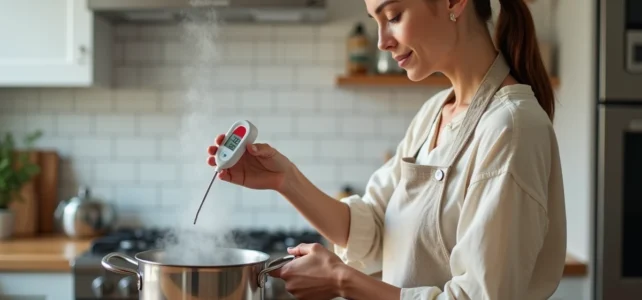
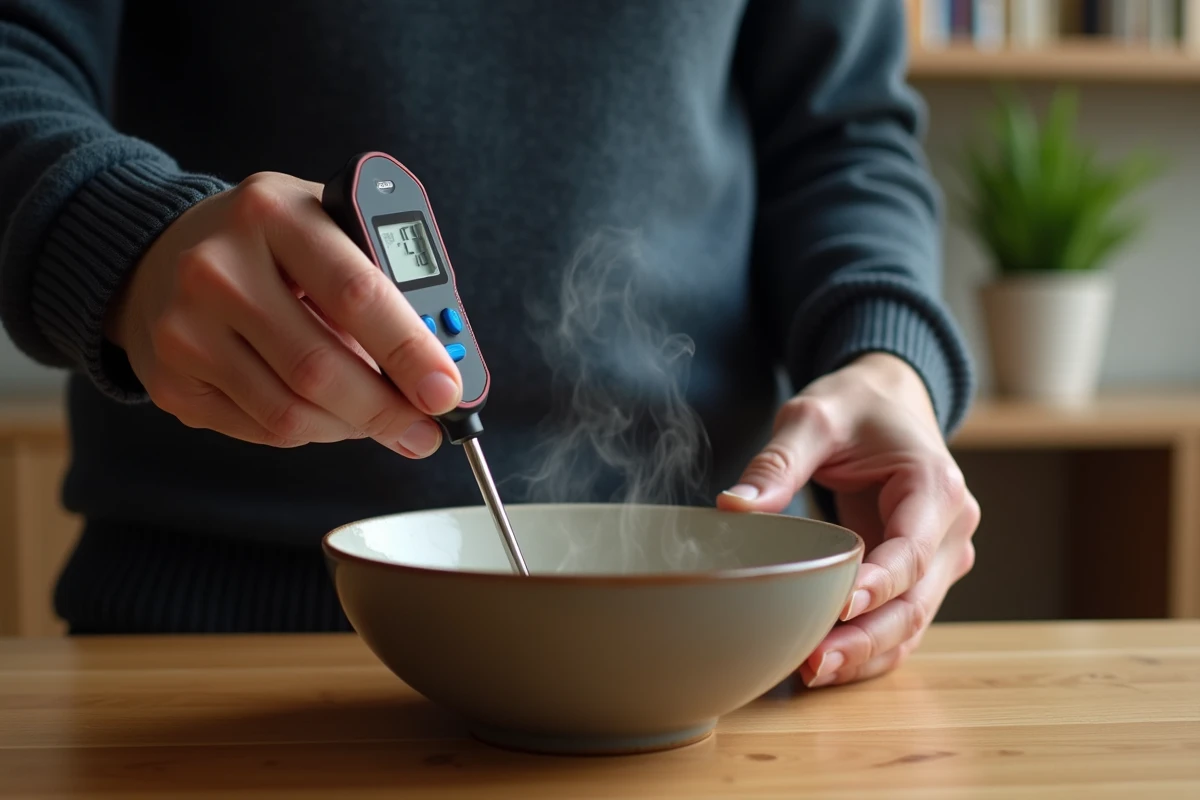
The simplest and most accessible means remains the digital probe thermometer. They can be found in all kitchen sections of supermarkets. The probe plunges directly into the water and displays the temperature in a few seconds, with an accuracy generally within one degree.
For those looking for tips to reliably achieve 60 degrees, this probe is the reference tool. It works equally well for checking tap water as for monitoring a pot on the stove.
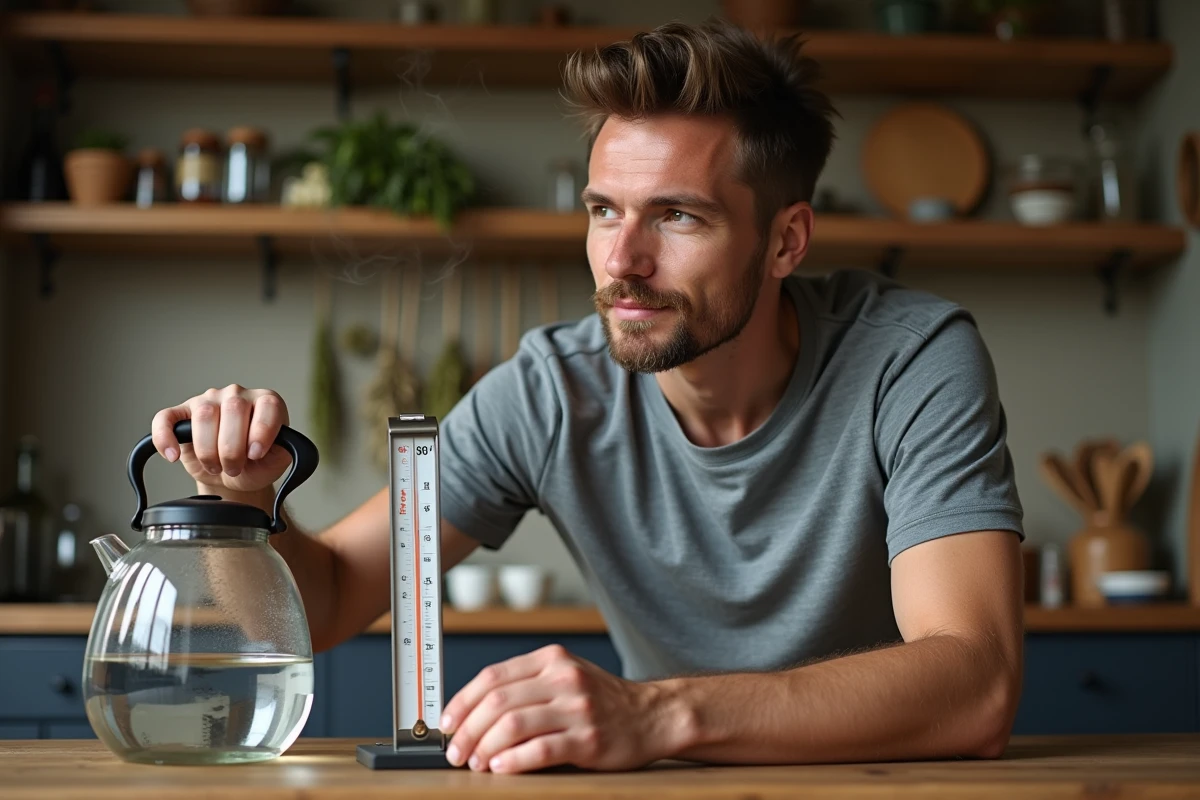
The classic alcohol thermometer (the graduated glass model) also works, but its reading is slower and its fragility makes it impractical for daily use. Infrared thermometers, on the other hand, measure surface temperature: they capture the heat emitted from the top of the liquid, not that of the water volume. The result can be skewed by several degrees, especially if the water has just been stirred or if the container is metallic.
Sensory cues to estimate temperature without a thermometer
Without any instruments, the human body provides usable clues, provided one knows their limits. These cues do not replace a measurement, but they allow for an approximation of the order of magnitude.
- Around 50 degrees, the hand submerged in water feels a strong but bearable heat for two to three seconds before the sensation becomes uncomfortable.
- At about 60 degrees, direct contact with the skin causes almost immediate pain. If the reflex to withdraw is instant, the water likely exceeds this threshold.
- Visually, water at 60 degrees does not boil. Fine bubbles may form at the bottom of the container (on a heated pot), but the surface remains calm, with no visible convective movement.
- For tea preparation, some enthusiasts use the sound of the kettle: a slight sound of simmering (sometimes described as a whisper) precedes boiling and corresponds to a range between 60 and 70 degrees.
These cues remain approximate. A gap of five to ten degrees is common with these methods. For sanitary use (checking the hot water tank), only a thermometer provides a usable answer.
Measuring water temperature at the point of use: the reliable method for the water heater
Checking the temperature of the water heater from its thermostat is not enough. The relevant measurement is made at the tap, directly at the point of use. The reason is simple: between the tank and the tap, the water loses heat as it travels through the pipes, especially if they are long or poorly insulated.
The method involves opening the hot water tap to the maximum (without mixing with cold water), letting it run for about thirty seconds to purge stagnant water in the pipe, and then plunging the thermometer probe into the flow. The tap furthest from the tank gives the most revealing result, as this is where thermal losses are greatest.
Difference between setpoint and actual temperature
A thermostat set to 60 degrees may deliver water at 50 or 55 degrees at a distant tap. This discrepancy can be explained by several factors: limescale buildup that reduces the efficiency of the heating element, an aging thermostatic probe that overestimates the temperature of the tank, or uninsulated copper pipes that dissipate heat along their path.
If the measurement at the tap reveals a significant discrepancy, increasing the thermostat setting by a few degrees can help compensate for the losses. The final adjustment should aim for water at 60 degrees at the point of use, not just in the tank.
Water temperature at 60 degrees: energy savings and sanitary safety
The threshold of 60 degrees was not chosen at random. It is the level at which the proliferation of Legionella is stopped in a storage tank. Below 50 degrees, these bacteria multiply rapidly. Between 50 and 60 degrees, their growth slows down without being completely prevented.
Raising the temperature above 65 degrees increases the energy consumption of the water heater without additional health benefits. Each additional degree puts more strain on the electric heating element and accelerates limescale buildup, which increases the electricity bill and reduces the lifespan of the device.
The proper thermostat setting balances safety and savings. For an electric tank, programming heating during off-peak hours to a setting that delivers 60 degrees at the tap remains the most effective strategy. Checking this temperature once or twice a year with a simple kitchen thermometer allows for the detection of limescale buildup or malfunction of the probe before it leads to overconsumption.
The distinction between individual housing and public establishments is worth noting. In public establishments, the setting of hot water temperature is subject to specific regulatory oversight, stricter than the recommendations applicable to individuals. For domestic use, the logic remains primarily sanitary and economic.
Measuring the water temperature at 60 degrees comes down to a simple action: a probe plunged into the flow at the tap, after a few seconds of purging. It is this direct measurement, repeated once or twice a year, that ensures the water heater’s setting fulfills its dual function of comfort and sanitary protection.